
Description
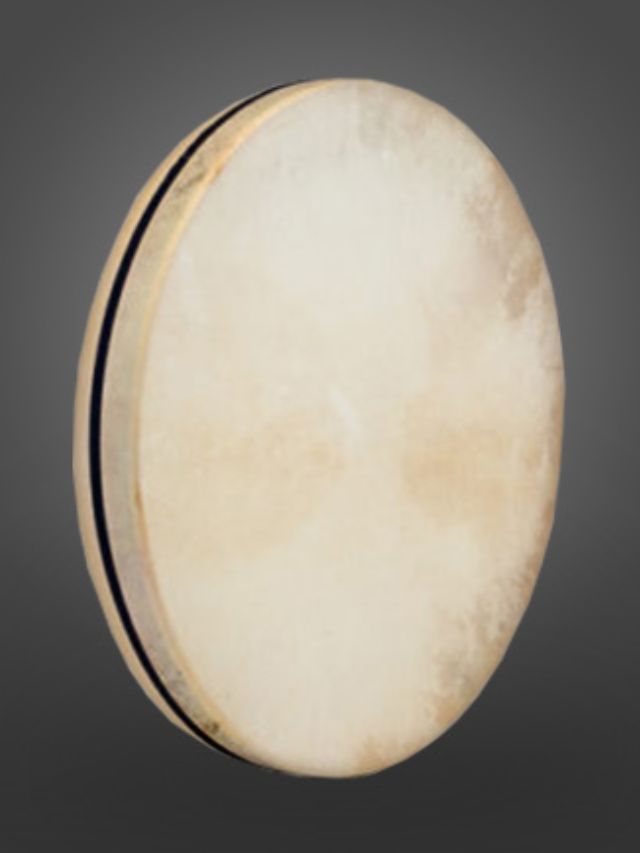
The daf is known as one of the most widespread percussion instruments in Iran and the Middle East. It has undergone various changes over the years, but its basic characteristics have remained largely unchanged. The instrument shares many similarities with other frame drums, but is distinguished by the use of metal rings on the inside of the wooden frame and the use of goatskin or sheepskin for the drumhead.
Over the years, various variations and adaptations of the original daf have emerged. Depending on its origin, the instrument has different names and aesthetic characteristics.
1. Iranian Daf
This is the most traditional and widely used type of daf percussion. It is characterized by its large diameter and the metallic, sound-producing rings. The drum is covered with a tightly stretched goatskin or sheepskin skin, which is usually treated with water or sugar to achieve optimal resonance. The edges of the frame are often painted with elaborate and colorful patterns. Its rhythmic qualities make it suitable for many traditional Persian musical styles. The daf from Majid Drums features metal rings on the inner surface of the frame and is covered with goatskin.
2. Turkish Daf
The Turkish daf is very similar to the Iranian style, but typically has a smaller diameter and a less prominent, smoother drumhead, which produces a deeper sound. The drumhead is shaped into a point at one end of the frame, allowing for variations in percussion and melody.
3. Pakistani Daf
The Pakistani daf resembles the Turkish daf, but its construction is generally more robust, making the instrument larger and heavier, and giving it a unique sound. It also often features a decorative light integrated into the center of the drumhead, giving it a distinctive appearance.
4. Indian Daf
The Indian daf is called “dhol” in northern India and “dafli” in the south. It is usually more rectangular in shape and has a smaller headjoint than the Iranian daf. The sound of the Indian daf is quite unique and rather high-pitched.
5. Balkan Daf
The Balkan daf resembles the traditional Iranian style, but has a thinner skin. The drumhead is typically made of camel or goat hide, while the frame is crafted from walnut, beech, or other hardwood. The frame’s decorations often vary by region.
6. Kurdish Daf
The Kurdish daf is a smaller and lighter variation, with a diameter of 35 to 45 cm. This type of daf is frequently played in various musical genres of the Middle East, including Sufi music, wedding ceremonies, and traditional dance. The frame is made of ebony, beech, or wild pear wood.
7. Balkan Tambourine
The Balkan tambourine, also known as the large frame tambourine, is similar to the daf, but with slight differences. The frame of the tambourine is equipped with several jingles near the membrane. The head of the frame resembles that of the Iranian daf, but shows minor variations.
Unlike most commercially available dafs, the Majid Drums daf is tunable. Problems with batter head tension, such as those caused by heat from stage lights, are therefore a thing of the past.
Tunable percussion instruments are a great choice for percussionists who want to expand their musical skills and explore new sounds and possibilities. The air hose system allows you to adjust the tension of the drumheads using a standard bicycle pump. This method eliminates the need to heat or humidify the drumhead, making the problem of tuning issues caused by fluctuating humidity or heat stress a thing of the past.
The daf is a versatile percussion instrument with a rich history in traditional, folk, and classical music worldwide. Since its origins in Iran, various versions have developed globally, played for different activities and musical performances. If you are interested in learning one of these variations, there are numerous resources available to get you started.
Available in 48cm and 53cm diameters. Frame width: 6cm.
Reviews
There are no reviews yet.